

Introduction
Cybersecurity in accounting refers to the technologies, policies, and security practices used to protect financial data, accounting systems, and client records from cyber threats.
Over the past two decades, the accounting profession has moved rapidly toward digital systems. [Cloud accounting] software, automated payroll platforms, digital tax filing systems, and real-time financial reporting tools have largely replaced traditional paper ledgers.
These technologies help accountants work faster and more efficiently. However, they also create new cybersecurity risks.
Accounting firms now store large amounts of sensitive financial information, including tax records, payroll data, bank details, and corporate financial statements. Because this data is highly valuable, accounting firms are becoming common targets for cyber criminals.
For this reason, cybersecurity in accounting has become a key priority. Modern accounting firms must protect client information through strong security practices while also meeting regulatory requirements and maintaining client trust.
At [Synergy Tax Accountants] protecting client financial data is an essential part of professional accounting services. Their team understands modern cybersecurity risks and follows best practices to keep client information safe.
Table of Contents
- Why Cybersecurity in Accounting is Increasingly Important?
- Major Cyber Threats Facing Accounting Firms
- How Hackers Access Accounting Systems?
- Best Cybersecurity Practices for Accounting Firms
- The Role of Synergy Tax Accountants
- Emerging Technologies Improving Accounting Security
- Conclusion
- Frequently Asked Questions (FAQ)
- Author Bio
1. Why Cybersecurity in Accounting Is Increasingly Important?
Accounting firms manage confidential financial data for individuals, companies, and organizations. If a cyberattack occurs, thousands of client records may be exposed, leading to financial losses and serious reputational damage.
Hackers often target accounting firms because their systems contain valuable information such as:
- Bank account details
- Tax identification numbers
- Payroll data
- Corporate financial reports
- Confidential business records
A data breach can also result in
- Legal penalties
- Regulatory fines
- Loss of client confidence
Therefore, protecting financial data has become a fundamental responsibility for modern accountants.
2. Major Cyber Threats Facing Accounting Firms
Phishing and Social Engineering
Phishing attacks are among the most common cybersecurity threats in accounting. Hackers send emails that appear to come from trusted sources such as tax authorities, banks, or accounting software providers
These emails try to trick employees into sharing login details or downloading malicious files.
Ransomware Attacks
Ransomware attacks are another major concern. In these attacks, hackers lock or encrypt company data and demand payment to restore access.
For accounting firms, ransomware attacks can disrupt operations, especially during busy tax periods.
Cloud Security Risks
Cloud accounting platforms offer many benefits but also require strong security management. Weak passwords, unsecured devices, or poor system settings can allow attackers to access financial systems.
Third-Party Software Risks
Accounting firms often use external tools for payroll processing, auditing, and expense management. If these third-party systems are compromised, they can create additional security risks.
3. How Hackers Access Accounting Systems?
Cyber criminals often gain access by exploiting small security flaws that are
- One common issue that has often been observed is weak password practices that need to be manipulated. Many employees reuse the same passwords across multiple platforms, making it accessible for hackers to access accounts.
- Working on unsecured public Wi-Fi networks can also expose login details, particularly when accountants work remotely.
- A lack of cybersecurity awareness among employees is a major factor that increases the risk of cyberattacks. Without proper training, employees may unknowingly click on malicious links, open Trojan attachments, or share proprietary information.
4. Best Cybersecurity Practices for Accounting Firms
To protect financial data, accounting firms should implement several security measures.
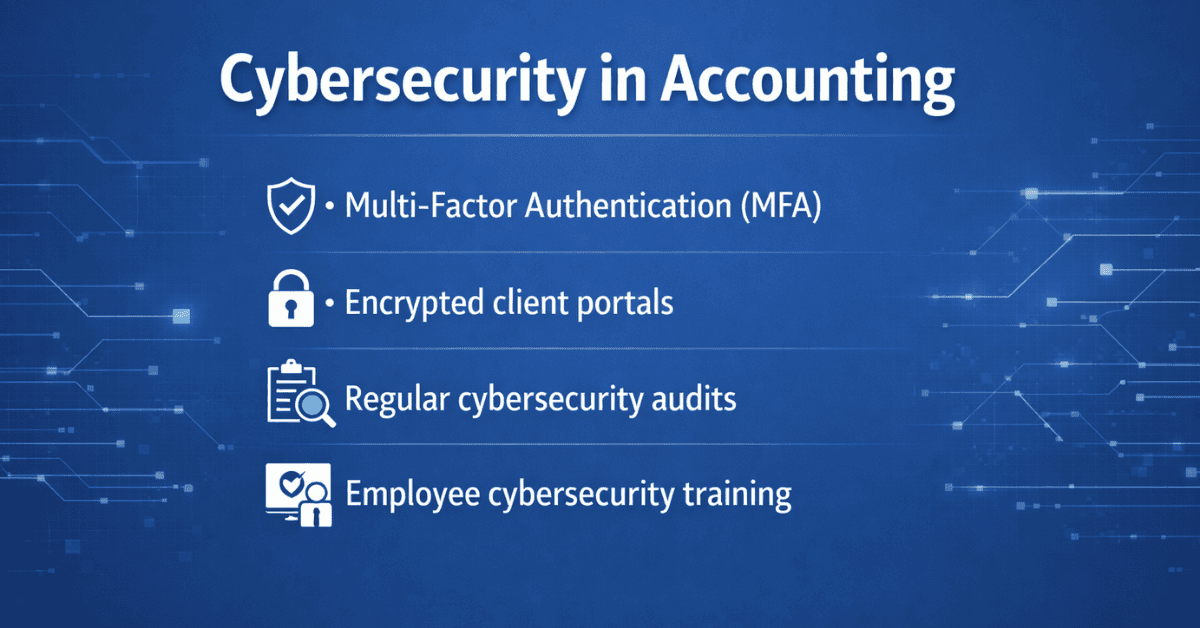
- Multi-Factor Authentication (MFA) adds an extra layer of security by requiring users to verify their identity using a second authentication method.
- Encrypted client portals allow accountants and clients to exchange financial documents securely instead of sending sensitive information through standard email.
- Regular cybersecurity audits help firms identify vulnerabilities, review user access rights, and maintain compliance with regulatory standards.
- Employee cybersecurity training is also essential so staff can recognize phishing attempts and other cyber threats.
5. The Role of Synergy Tax Accountants
At Synergy Tax Accountants, protecting client information is considered just as significant as manipulating financial records.
Their professionals adopt strict cyber security practices to ensure the safety of client data. The firm uses well protected accounting systems, monitors potential cyber risks, maintains protected communication with clients, and complies with professional security standards.
By incorporating cybersecurity into their accounting services, Synergy Tax Accountants impart clients with confidence that their financial information is properly secured.
6 Emerging Technologies Improving Accounting Security
Modern technologies are helping accounting firms strengthen their cybersecurity systems. The diverse technological aspects and their key features that contribute to stronger data protection and secure financial management are outlined below.
- [Artificial intelligence] (AI) can monitor system activity and quickly detect suspicious behaviour, such as unusual login attempts or abnormal data transfers.
- [Blockchain technology] may also improve accounting security by creating permanent financial records that cannot be altered without leaving a trace.
- Modern approach is the Zero Trust security model, which requires continuous verification of users and devices before allowing access to sensitive systems.
7. Conclusion
The digital transformation of accounting has evolved ample opportunities for efficiency and innovation. At the same time, it has increased cybersecurity vulnerabilities.
Accounting firms manage highly sensitive financial information, making them attractive targets for cyber criminals. Strong cybersecurity practices in accounting are therefore essential to protect data, maintain regulatory compliance, and preserve client trust.
Professional firms such as Synergy Tax Accountants combine financial expertise with modern cybersecurity strategies to ensure that client financial data remains secure in an increasingly digital world.
8. Frequently Asked Questions (FAQ)
Q. What is cybersecurity in accounting?
Ans: Cybersecurity in accounting refers to the practices and technologies used to protect financial data, accounting systems, and client information from cyber threats.
Q. Why are accounting firms targeted by hackers?
Ans: Accounting firms store valuable financial data such as tax records, payroll information, and bank details, which makes them attractive targets for cyber criminals.
Q. How can accounting firms protect client financial data?
Ans: Accounting firms can protect client information by using strong passwords, multi-factor authentication, encrypted client portals, regular cybersecurity audits, and employee training.
Q. What is cloud accounting security?
Ans: Cloud accounting security refers to
- Protecting financial data stored in cloud-based accounting systems using encryption
- Monitoring tools
- Secure access controls
Q. Why is cybersecurity training important for accountants?
Ans: Cybersecurity training assists accountants comprehend fraudulent emails, malicious links, and other cyber threats before they compromise sensitive financial information.
9. Author Bio
- This article is prepared by the Synergy Tax Accountants team
- All members of the firm are ACCA-qualified professionals
- Many have over 20 years of experience in accounting, taxation, and financial advisory services.
- The firm is committed to providing reliable financial solutions while maintaining the highest standards of data protection and client confidentiality